
Direct factory supply of certified corrosion-resistant fasteners conforming to ASTM, DIN, ISO, and ASME standards with full material traceability.
The Greater Bangkok metropolitan area, spanning key industrial zones such as Samut Prakan, Pathum Thani, Ayutthaya, and seamlessly integrated into the Eastern Economic Corridor (EEC) connecting Rayong and Chonburi, presents one of the most demanding environmental operational landscapes for industrial bolting worldwide. Classified under ISO 12944 corrosion categories as C4 (High Industrial/Coastal) to C5-M (Very High Marine), the atmospheric condition in Greater Bangkok is characterized by relative humidity frequently exceeding 85%, persistent high ambient temperatures (30°C to 40°C), elevated ultraviolet radiation, and airborne marine salinity from the Gulf of Thailand combined with aggressive industrial sulfur pollutants.
Conventional surface treatments—such as standard electro-zinc plating, plain hot-dip galvanizing (HDG), or basic black oxide—fail prematurely under these tropical coastal conditions. Electro-zinc plating typically succumbs to white rust within 96 to 120 hours of salt spray exposure, while hot-dip galvanizing introduces dimensional thread clearance problems (over-tapping requirements), high friction coefficients leading to bolt galling during high-torque makeup, and vulnerability to hydrogen embrittlement in high-tensile alloy steels like ASTM A193 Grade B7 or Grade B16.
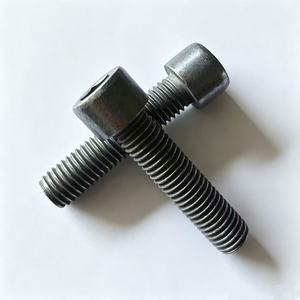
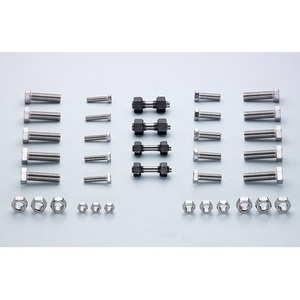
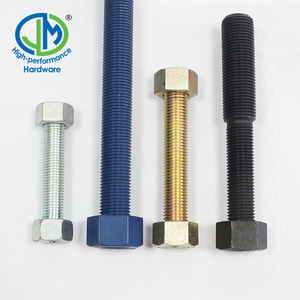
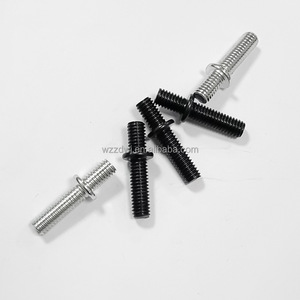
To solve these engineering challenges, our factory supplies specialized Xylan® fluoropolymer coated stud bolts, heavy hex nuts, and machine screws tailored specifically to the procurement standards of Bangkok-based EPC contractors, petrochemical plant managers, power utility operators, and offshore marine engineers. By fusing matrix chemistry consisting of Polytetrafluoroethylene (PTFE), Ethylene Chlorotrifluoroethylene (ECTFE), and specialized organic resin binders over engineered micro-porous sacrificial undercoats (such as Zinc-Nickel or Phosphate), our Xylan coated bolts provide absolute barrier protection, chemical immunity, and guaranteed low break-out torque even after years of continuous tropical exposure.
A deep dive into tribological friction management, barrier layer chemistry, and multi-layer corrosion prevention mechanisms.
Our factory applies a precision 2-coat or 3-coat composite fluoropolymer system. The primary layer consists of an engineered sacrificial metal alloy coating (typically Electroplated Zinc-Nickel 12-15% Ni or Zinc Phosphate), followed by a high-build resin primer and a Xylan 1014 or Xylan 1424 topcoat. This dual-action mechanism ensures that even if mechanical abrasion breaches the outer PTFE film, the sacrificial undercoat prevents substrate pitting and galvanic corrosion.
In high-pressure flange joint assembly (such as ASME B16.5 pipelines), uncontrolled friction causes improper bolt tensioning, leading to flange leaks or thread stripping. Xylan fluoropolymer coatings reduce the friction coefficient ($\mu$) to a ultra-consistently low range of 0.06 to 0.08. This eliminates thread galling (especially on stainless steel SUS304/SUS316/B8/B8M studs) and converts up to 90% of applied torque directly into uniform axial clamping force.
Operating effectively across temperature extremes from -200°C to +260°C (-328°F to +500°F), Xylan coated fasteners withstand severe thermal cycling without micro-cracking or flaking. Furthermore, the fluoropolymer matrix exhibits near-complete inertness against aggressive industrial chemicals prevalent in Bangkok’s chemical refining and wastewater treatment infrastructure, including hydrofluoric acid, caustic soda, hydrogen sulfide ($H_2S$), wet chlorine, and aviation fuels.
Evaluating standard surface finishes against Factory-Applied Xylan Fluoropolymer Coating for coastal industrial installations.
| Surface Treatment / Coating Spec | Salt Spray Life (ASTM B117) | Friction Coeff. (μ) | Operating Temp. Range | Galling Resistance | Hydrogen Embrittlement Risk |
|---|---|---|---|---|---|
| Xylan® 1424 over Zn-Ni Base (Our Factory Spec) | 3,000 to 5,000+ Hours | 0.06 – 0.08 (Ultra-Low) | -200°C to +260°C | Outstanding / Zero Galling | None (Bake-Relieved Process) |
| Standard Hot-Dip Galvanizing (HDG - ASTM A153) | 500 to 1,000 Hours | 0.19 – 0.25 (High/Irregular) | Up to +200°C | Poor (High Thread Friction) | Moderate Risk in High-Tensile Steel |
| Electro-Plated Zinc (ASTM B633) | 96 to 250 Hours | 0.15 – 0.18 (Medium) | Up to +120°C | Fair | High Risk if Not Baked Promptly |
| Cadmium Plating with Chromate | 500 to 1,200 Hours | 0.12 – 0.14 (Low) | Up to +230°C | Good | High (Restricted under RoHS/REACH) |
| Plain / Black Oxide Finish | Under 24 Hours | 0.18 – 0.22 (High) | Up to +300°C | Very Poor | Low |
Providing specialized engineering fasteners optimized for key infrastructure and industrial hubs supplied through Bangkok.
Headquartered and managed via executive procurement offices in Bangkok, the massive petrochemical complexes in Rayong require ASME B16.5 and ASME B18.31.2 stud bolts (ASTM A193 Grade B7, B7M, B16) capable of maintaining tight gasket seals on high-pressure heat exchangers and distillation towers. Xylan coated studs eliminate hot-galling and permit non-destructive break-out maintenance during scheduled turnarounds.
Offshore platforms operating in the Gulf of Thailand encounter aggressive marine splash zones, high salt fog, and continuous vibration. Xylan coated double-ended stud bolts and heavy hex nuts (ASTM A194 Grade 2H, Grade 7M) resist salt spray degradation over 3,000+ hours, maintaining structural integrity across riser clamps, subsea manifolds, and deck cranes.
Bangkok's municipal infrastructure relies on extensive pumping stations, canal gates, and wastewater treatment plants designed to handle seasonal monsoon flooding and brackish river water. Stainless steel SUS304/SUS316 bolts coated with Xylan prevent severe localized pitting and biological fouling in submerged pump casings, sluice valves, and aeration basins.
As the "Detroit of Asia," the industrial estates surrounding Greater Bangkok require high-tensile fasteners (Property Class 8.8, 10.9, 12.9) with uniform coating thickness (15 to 25 microns) for automated assembly lines. Our factory-controlled dip-spin application ensures thread pitch compliance without requiring post-coating thread chasing.
Combining state-of-the-art cold forging, CNC machining, automated fluoropolymer coating lines, and rigorous laboratory validation.
Superior coating adhesion begins with rigorous surface engineering. Every steel bolt undergoes automated aluminum oxide or garnet shot-blasting to achieve an Sa 2.5 cleanliness rating and a uniform anchor profile of 25-45 microns, guaranteeing zero coating flaking under extreme mechanical vibration.
Our factory utilizes multi-stage automated dip-spin basket systems that precisely regulate spin speed, tilt angle, and cycle times. This yields absolute film thickness uniformity (20µm ± 3µm) across internal nut threads and external bolt crests, cured in multi-zone infrared ovens at precise thermal curves.
Every production lot exported to Bangkok is supported by EN 10204 3.1 material test reports. Quality control includes magnetic gauge film thickness testing (ASTM B499), cross-hatch tape adhesion testing (ASTM D3359), continuous salt spray testing (ASTM B117), and torque-tension verification.
Direct technical answers addressing standards compliance, shipping logistics, thread tolerances, and application guidance for Thai industry buyers.
Our standard factory specification for Xylan 1014 or Xylan 1424 fluoropolymer coating is 15 to 25 microns (0.0006" to 0.0010") total dry film thickness (DFT). This controlled thickness provides optimum salt spray protection (3,000+ hours) while ensuring full compatibility with standard ASME B1.1 Class 2A / 2B thread pitch tolerances without requiring over-tapping of nuts.
While Hot-Dip Galvanizing provides baseline barrier protection, it suffers from three major drawbacks in tropical marine environments: 1) High and erratic friction coefficient ($\mu = 0.19-0.25$), causing unpredictable bolt preload and galling; 2) The need to over-tap nuts, which strips away protective zinc layers on internal threads; and 3) Susceptibility to rapid white rust formation in Bangkok’s high ambient humidity. Xylan offers a lubricated, chemical-resistant barrier with a predictable friction coefficient ($\mu = 0.06-0.08$) and up to 5 times longer salt spray resistance.
We maintain structured ocean container freight schedules to Bangkok Port (Klong Toey) and Laem Chabang Deep Sea Port, as well as expedited air freight dispatch to Suvarnabhumi Airport (BKK). All shipments are packed in heavy-duty, heat-treated seaworthy wooden crates with vapor corrosion inhibitor (VCI) lining, accompanied by complete shipping documentation, HS code categorization, and EN 10204 3.1 mill test certificates to ensure swift customs release.
Yes. Due to the exceptional toughness and low coefficient of friction of Whitford/PPG Xylan fluoropolymers, fasteners can typically be disassembled and re-torqued multiple times without destroying the underlying protective layer. This significantly reduces long-term maintenance inventory costs for petrochemical facilities and power stations in Thailand.
We manufacture Xylan coated fasteners across a comprehensive range of material specifications, including Carbon & Alloy Steel (ASTM A193 B7, B7M, B16, A320 L7, L43, A194 2H, 2HM, 7), Stainless Steel (ASTM A193 B8, B8M Class 1 & Class 2), Duplex & Super Duplex Steel (UNS S31803, S32205, S32750), and High-Nickel Alloys (Inconel 625, 718, Monel K-500, Hastelloy C276).
Need certified Xylan coated stud bolts, heavy hex nuts, or engineered fast-turnaround custom fasteners for your project in Thailand? Contact our technical engineering team today for instant price quotes, material data sheets, and batch production lead times.