
1. Engineering Fluoropolymer Coated Fastener Systems for the Marmara Industrial & Marine Ecosystem
The Marmara region, encompassing Istanbul, Kocaeli, Dilovası, and Gebze, stands as the industrial heartbeat of Turkey. However, operating heavy industrial machinery, offshore energy equipment, chemical processing plants, and marine infrastructure within this corridor presents severe corrosion engineering challenges. The unique microclimate of Istanbul—characterized by high relative humidity, elevated marine salinity from the Bosphorus and Marmara Sea, coupled with heavy airborne industrial pollutants such as sulfur dioxide (SO2) and hydrogen sulfide (H2S)—accelerates galvanic corrosion, crevice attack, and stress corrosion cracking (SCC) in conventional fasteners.
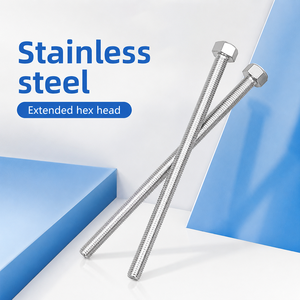
As a specialized manufacturer and global exporter of high-grade Xylan coated bolts and fluoropolymer-treated stud bolts, our manufacturing facility produces bolting solutions specifically engineered to survive these rigorous multi-axis environmental stresses. Traditional zinc plating or hot-dip galvanizing (HDG) frequently falls short in Istanbul's petrochemical refitting yards and marine docks due to coating micro-cracking, hydrogen embrittlement risks during acid pickling, and inconsistent thread tolerances that lead to nut galling during high-torque assembly.
Technical Insight (Information Gain): Xylan® fluoropolymer coatings (such as Xylan 1070, 1014, and 1424) combine a durable resin binder matrix with polytetrafluoroethylene (PTFE) lubricant solids. Unlike metallic plating, Xylan forms an impermeable physical barrier against electrolyte ingress while maintaining an extraordinarily low coefficient of friction (µ = 0.08 to 0.12). This prevents galling under cyclic stress and ensures repeatable torque-tension relationships for critical pressure vessel flanges.
1.1 Micro-Structure & Corrosion Resistance Mechanism of Xylan Coatings
Xylan coating systems applied at our manufacturing plant utilize a dual-coat application strategy comprising a corrosion-inhibiting primer layer followed by a topcoat rich in PTFE micro-particles. The subterranean primer bonds chemically to phosphate-treated alloy substrates (such as ASTM A193 B7, B16, or Stainless Steel A2/A4), creating a barrier against electrochemical corrosion cell formation.
When exposed to harsh salt spray tests according to ASTM B117 specifications, standard hot-dip galvanized bolts exhibit red rust failure between 300 to 500 hours. In contrast, our precision-coated Xylan 1070 bolts continuously exceed 3,000 hours of continuous salt spray exposure without red rust breakout or coating flaking. This dramatic improvement in service life drastically reduces turnaround downtime and maintenance expenditure for infrastructure along the Golden Horn and Tuzla Shipyards.
| Coating / Surface Treatment | Typical Thickness (µm) | ASTM B117 Salt Spray (Hours) | Friction Coeff (K-Factor) | Max Operating Temp (°C) | Hydrogen Embrittlement Risk |
|---|---|---|---|---|---|
| Xylan 1070 / PTFE Coating | 20 - 35 | 3,000+ Hours | 0.11 - 0.15 | 260°C (Continuous) | Zero Risk (Mechanical Prep) |
| Hot-Dip Galvanizing (HDG) | 45 - 65 | 300 - 500 Hours | 0.19 - 0.25 | 200°C | Moderate to High Risk |
| Electro-Zinc Plating (Cr3+) | 8 - 12 | 96 - 120 Hours | 0.15 - 0.18 | 120°C | High Risk on High Tensile |
| Zinc-Nickel Alloy Plating | 10 - 15 | 1,000 - 1,500 Hours | 0.14 - 0.17 | 250°C | Low Risk (With Baking) |
| Passivated Stainless Steel (AISI 316) | N/A (Bare Metal) | 1,000+ (Non-pitting) | 0.25 - 0.30 (High Galling) | 400°C | None |
2. Strategic Industrial Application Scenarios Across the Greater Istanbul Corridor
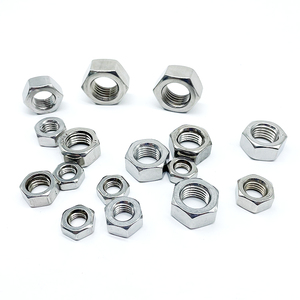
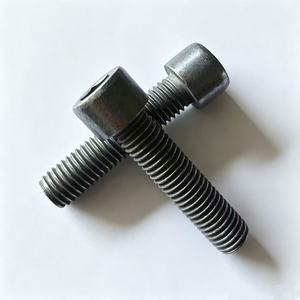
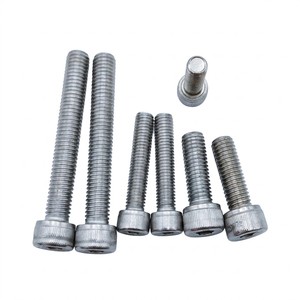
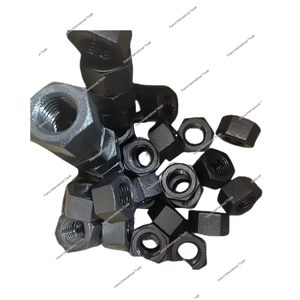
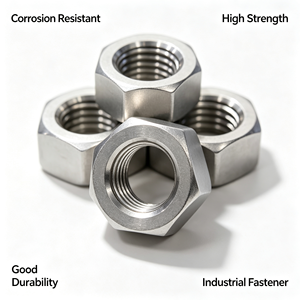
Our manufacturing and export operations cater directly to major EPC contractors, maintenance supply firms, and heavy industry operators situated within key industrial zones across Turkey. The tailored deployment of Xylan coated high-strength stud bolts, heavy hex nuts (ASTM A194 2H/8M), and socket head cap screws resolves precise mechanical failure points in four critical sectors:
Tuzla & Yalova Marine Yards
Subsea piping flanges, rudder assemblies, and deck machinery bolts exposed to brackish seawater require high break-out torque stability and zero rust seizure during dock re-fits.
Dilovası & Kocaeli Refineries
High-temperature hydrotreating units, desulfurization columns, and chemical storage tanks where thermal cycling accelerates atmospheric corrosion and bolt relaxation.
Submarine Tunnel Infrastructure
Underwater transport links such as the Eurasia Tunnel and Marmaray rail networks demand structural bolting with extreme fatigue resistance and 30-year design life.
Thrace Wind Energy Plants
Offshore and coastal wind turbine tower flange connections subjected to dynamic vibration loads, moisture condensation, and cyclic mechanical strain.
2.1 Petrochemical & Refinery Flange Bolting (SOCAR STAR & Tupras Refineries)
Refineries operating near the Marmara basin process sour crudes containing volatile sulfur compounds. Under elevated temperatures exceeding 350°C, un-coated alloy steel bolts (like raw ASTM A193 B7) suffer from atmospheric scaling, while standard zinc platings melt or vaporize. Our specialized Xylan 1014 and 1070 series coatings retain physical structural integrity across a temperature window ranging from -195°C (cryogenic LNG application) up to +260°C continuously.
Furthermore, during routine refinery turnarounds, maintenance engineers frequently encounter "frozen" or heat-fused nuts on heat exchanger flange studs. Traditional torch-cutting or nut-splitting generates spark hazards in volatile hydrocarbon zones and damages expensive flange faces. Xylan coated stud bolts ensure effortless breakout using standard hydraulic torque wrenches, reducing overhaul downtime by up to 60% and enabling fastener reusability.
2.2 Shipbuilding, Marine Repair & Subsea Offshore Installations
Istanbul’s Tuzla shipyard zone is a premier Mediterranean ship repair and conversion hub. Fasteners utilized in seawater cooling lines, ballast pump valves, and marine propulsion housing are constantly exposed to splash zones where salt crystals dry and concentrate. Bare stainless steel fasteners (AISI 304/316) in these confined geometries frequently suffer from severe galling (cold welding) during installation, leading to thread destruction.
Applying Xylan PTFE coating over Grade A2-70, Grade A4-80, or Super Duplex 2507 fasteners completely eliminates metal-to-metal contact during thread engagement. The low friction coefficient acts as a solid-state lubricant, guaranteeing smooth tightening without anti-seize pastes that wash away under seawater velocity.
ISO 9001:2015 Manufacturing
Our state-of-the-art facility utilizes automated CNC thread rolling, controlled thermal heat treatment, and precision electrostatic spray lines ensuring uniform 20-30 micron coating thickness.
Full Heat Traceability (EN 10204 3.1)
Every batch of raw material—from chromium-molybdenum alloy steel to super duplex alloys—is supplied with original mill test certificates, chemical analysis, and mechanical stress test reports.
Streamlined Logistics to Istanbul Ports
We manage direct sea freight and air cargo dispatch straight to Ambarlı Port, Haydarpaşa Customs Port, and Istanbul Airport Free Trade Zones, offering DDP/CIF flexible shipping terms.
3. Localized Procurement Trends & Regulatory Compliance in Turkey
As Turkey advances its industrial infrastructure, local procurement managers, Turkish Standards Institution (TSE) auditors, and international EPC consultants are modernizing their technical tender specifications. Key market trends influencing the demand for specialized Xylan coated fasteners in Istanbul include:
- Transition to Eco-Friendly Cadmium-Free Coatings: European Union REACH regulations and Turkish Ministry of Environment directives have severely restricted cadmium and hexavalent chromium (Cr6+) plating due to toxic environmental residues. Xylan PTFE coatings comply fully with RoHS and REACH standards, providing superior anti-corrosion without heavy metal toxicity.
- Adoption of EU Carbon Border Adjustment Mechanism (CBAM): Turkish industrial exporters selling machinery and structural assemblies to Europe must document the carbon footprint of structural components. Our plant utilizes energy-efficient induction heat treatment lines and sustainable waste recovery, aligning with green procurement frameworks.
- Harmonization of Imperial & Metric Fastener Standards: While domestic Turkish municipal infrastructure utilizes Metric threads (DIN 931/934), regional oil, gas, and energy developments dominated by international standards require imperial UNC/8UN thread series (ASME B18.2.1, B18.2.2, ASME B16.5). Our dual manufacturing lines produce both thread systems with overtapped nut tolerances designed specifically to accommodate 25-micron Xylan build-up without thread binding.
4. Fastener Metallurgical Spectrum & Coating Options
A successful high-pressure joint depends on pairing the optimal metal substrate with the appropriate coating formulation. Our engineering team provides technical selection assistance based on fluid medium, working pressure (ANSI Pressure Classes 150 through 2500), and operating temperature ranges:
4.1 High Tensile Carbon & Alloy Steel Grades
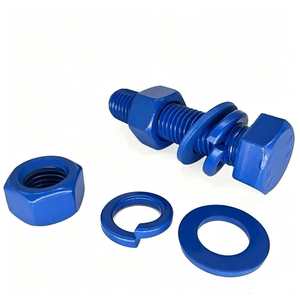
For high-pressure piping, the benchmark specification remains ASTM A193 Grade B7 alloy steel (AISI 4140 quenched and tempered alloy), capable of achieving minimum tensile strength of 125,000 psi (860 MPa). To prevent hydrogen-induced stress cracking in sour gas environments containing wet H2S, we supply ASTM A193 Grade B7M fasteners paired with ASTM A194 Grade 2HM heavy hex nuts, fully protected by Xylan 1070 green or blue coatings.
4.2 Stainless Steel & Super Alloy Fasteners
In highly oxidizing chemical lines or exposed offshore decks, austenitic stainless steels (ASTM A193 Grade B8 Class 2 / B8M Class 2) offer inherent base-metal corrosion resistance. However, their tendency to severe thread galling requires Xylan 1424 or Xylan 1014 topcoats. For subsea manifold systems operating under extreme pressure, we manufacture and coat Duplex 2205 (UNS S31803) and Super Duplex 2507 (UNS S32750) heavy hex fasteners featuring Pitting Resistance Equivalent Numbers (PREN) exceeding 40.